

Volume 1 | Into the Wild
A visit to the Climate Solutions exhibit at The Wild Center and more

Greetings and welcome to the very first volume of Picturing the Future, a visual digest of the most interesting ads, art, storytelling & design used to communicate environmental messages and move the needle on sustainability. I’m Melissa, a Senior Visual Designer at DG+Design, where I work with leading companies across the cleantech industry. I’ve also spent over a decade curating exhibitions in galleries and museums. That experience has shown me the incredible power visual communication has to change not only how people act, but also what they believe and feel. Now it's my job to help cleantech companies whip up some pretty remarkable visual stories that will get people pumped to make a change.
The actions we take to tackle climate change are not only driven by technology and economics, but also by our culture and social norms. How we see the world around us is just as important as the infrastructures and systems we build. Every week, I'll share creative projects and ideas that show how design is key to imagining a better future.
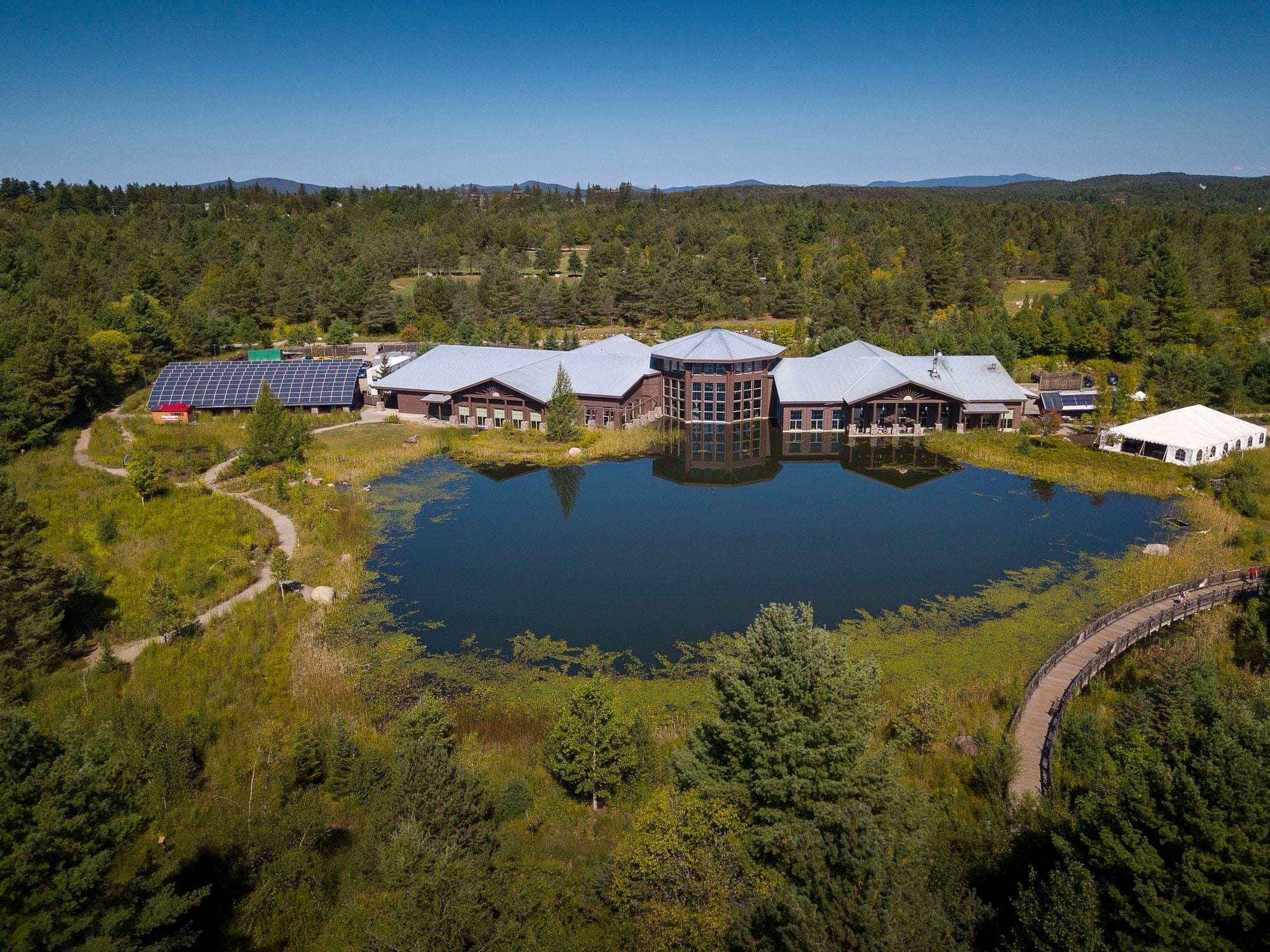
Earlier this month I was up in Lake Placid, New York for a week-long summer holiday with my partner Eric’s family and we decided to visit The Wild Center in Tupper Lake. Eric and I had taken our kids to the center last year and had a great time exploring, especially meandering through their Forest Music Walk.
During this year’s visit we were lucky enough to catch their current exhibit, Climate Solutions, which opened last July (we just missed its opening last year by a week).
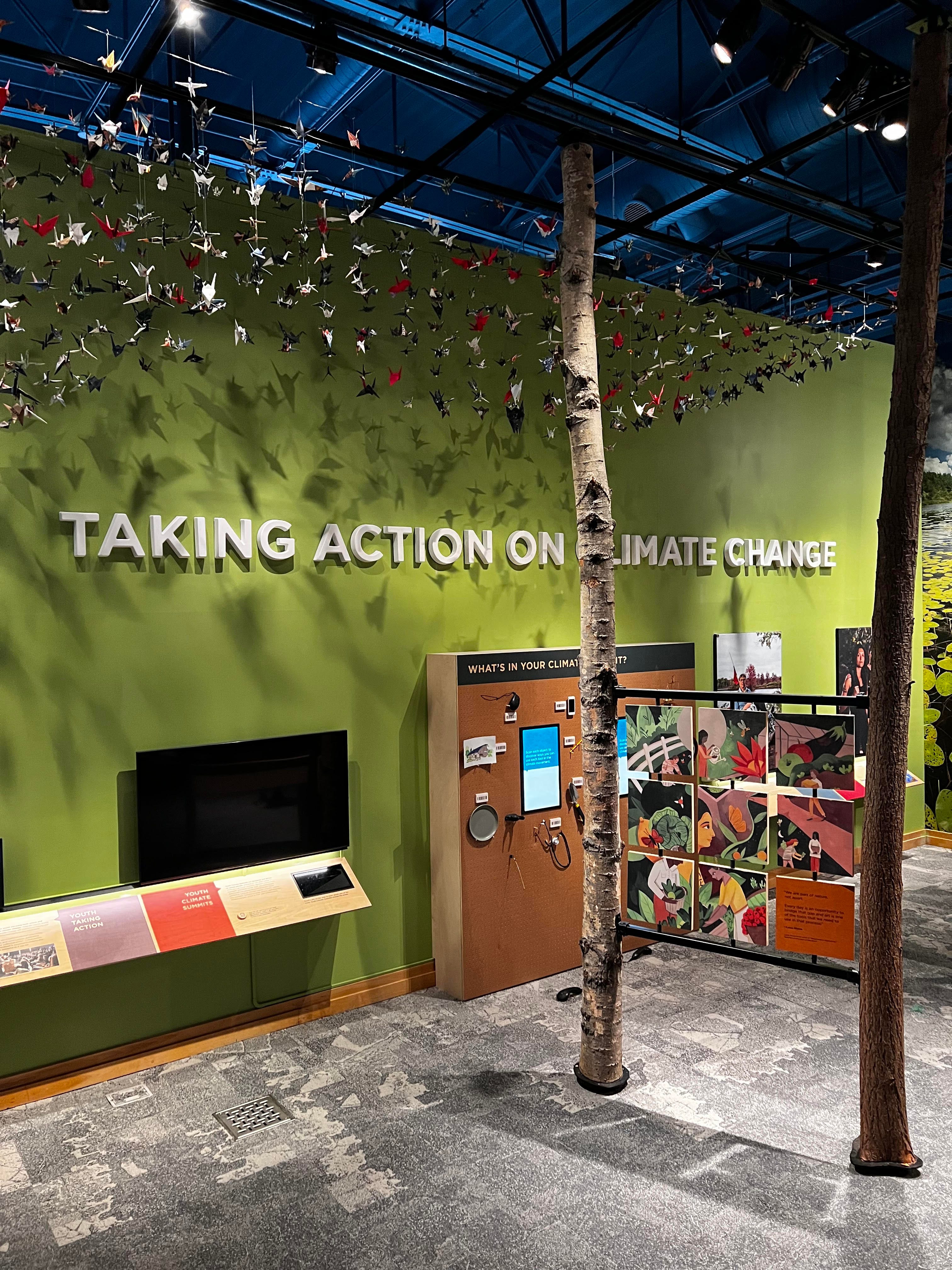
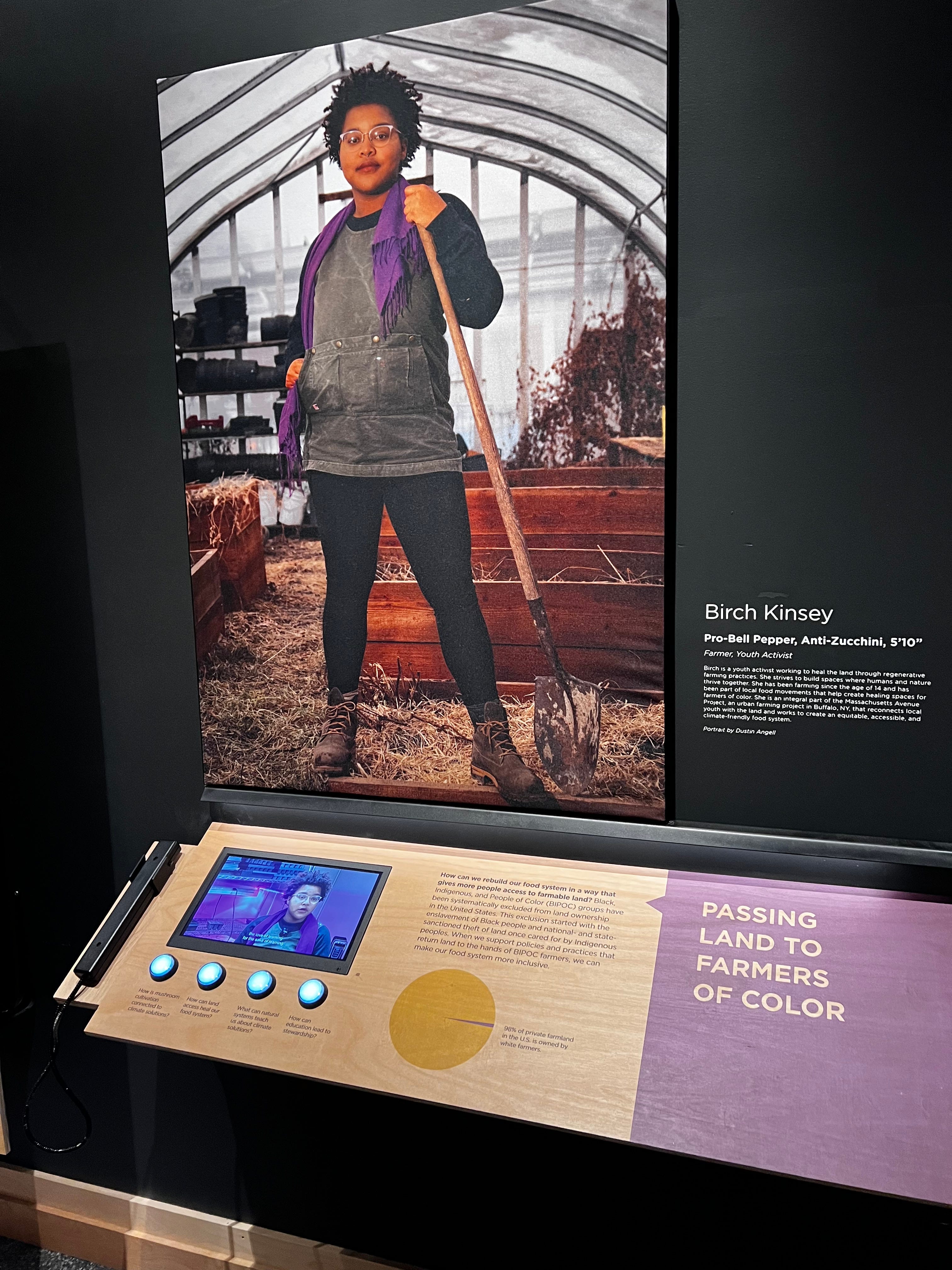
Climate Solutions at The Wild Center takes a unique approach to exploring the challenge of climate change. Rather than focusing solely on science or policy, the exhibit spotlights the inspiring stories of individuals and communities who are already working to build a web of climate solutions in their everyday lives. This includes farmers, scientists, solar installers, youth entrepreneurs, indigenous neighbors, and more, all of whom are making a difference in their own ways. In telling these stories, the exhibit highlights the fact that solutions are already happening, and that everyone has a role to play in tackling climate change.
The exhibit is divided into four sections: Energy, Food Systems, The Natural World, and Taking Action. In each section, the center has done a wonderful job of explaining the drivers of human-caused climate change, and of presenting solutions that address a wide range of concerns. These solutions include those that mitigate the effects of climate change, those that help us adapt to a changing world, and those that promote greater resilience, education, and equity.
I thought the center did a great job striking a balance between featuring solutions that are personally relevant and actionable with community-level solutions that can help address the scale of the problem. The exhibit doesn't feel alarmist or sensationalist, but instead presents a hopeful vision for the future tied to action.
Visitors are encouraged to participate in the exhibit's many hands-on activities in their “Tinkering Studio”, from creating flowers and animal homes from recycled materials, to building wind turbines and electric cars out of LEGOs. Visitors can also contribute their own ideas to the exhibit's interactive mosaic, which showcases a range of creative solutions from the public.


Climate Solutions is also a shining example of sustainable exhibit design, with its emphasis on creative reuse, recycling, and upcycling. From thrift store phones repurposed as interactive storytelling devices, to old bowling alley lanes converted into a countertop, the exhibit team worked hard to minimize waste and environmental impact, without sacrificing quality or style.
From the choice of low-maintenance building materials, to signage made from recycled plywood, every aspect of the exhibit was thoughtfully considered to maximize sustainability.
The Wild Center is committed to sustainability in all aspects of its operations, from its LEED-certified building (they were the very first museum in NY State to be certified), to its many energy efficiency initiatives, to its use of renewable energy sources, and more. In everything it does, The Wild Center walks the walk when it comes to environmental responsibility.
What (else) I’m visiting
This weekend I will be in NYC and am planning to visit the Brooklyn Botanic Garden’s Power of Trees exhibit. From the exhibit description:
This extensive, multifaceted show, up through October, explores the many ways in which trees provide benefits to urban neighborhoods, structure and stability for ecosystems, and a means for combating climate change—even as they are themselves threatened by rising global temperatures. Power of Trees includes site-specific art installations by local BIPOC artists, co-presented with AnkhLave Arts Alliance, that celebrate trees as community hosts; the photography exhibition Witness Trees by Brooklyn-based artist Carolyn Monastra; a show on the trees of Brooklyn’s Little Caribbean complete with recipes; a Shinnecock oral history of trees; kid-friendly science and storytelling features; and much more.
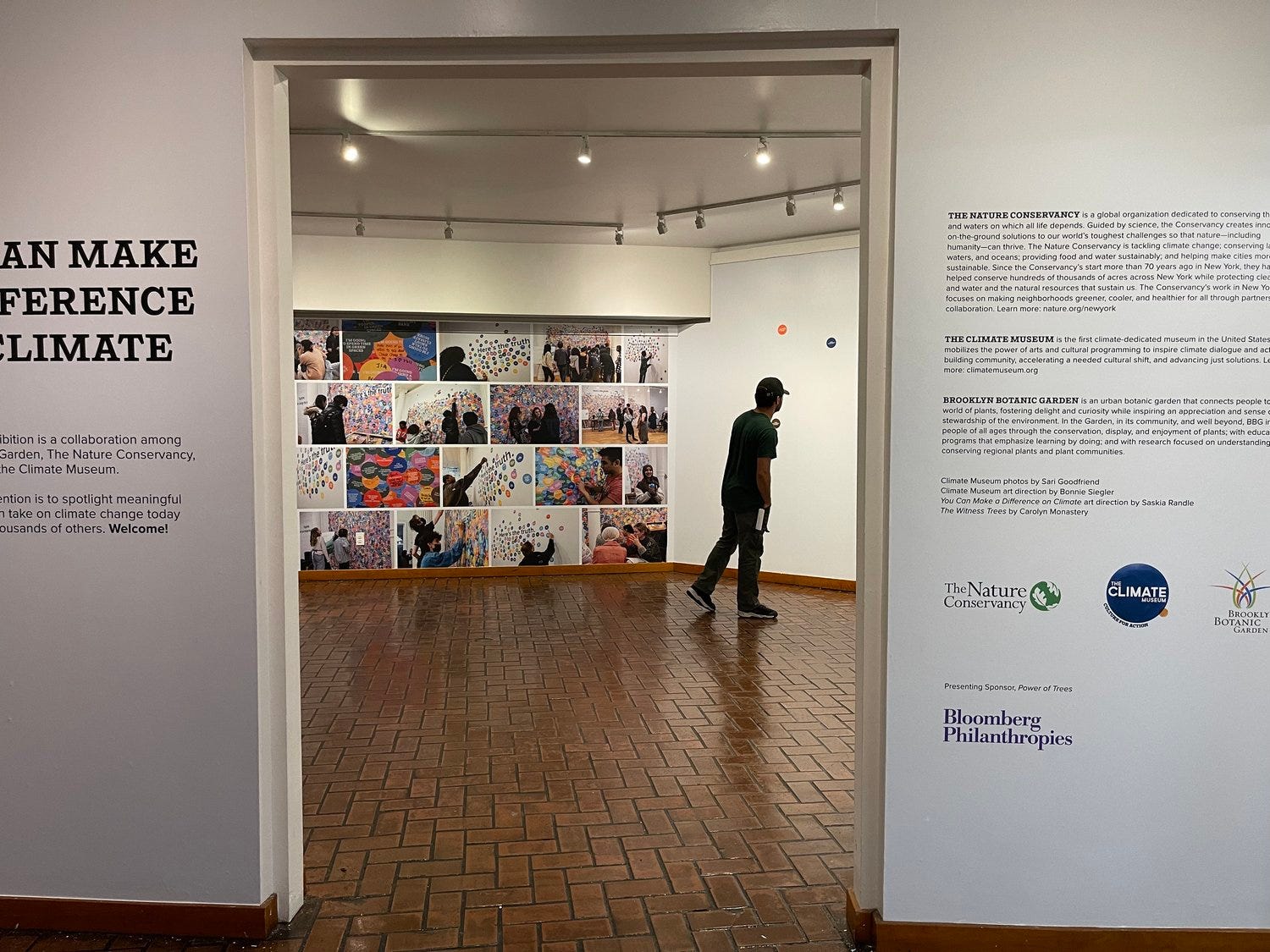
The exhibit also includes a pop-up installation from The Climate Museum in partnership with The Nature Conservancy called, “You Can Make a Difference on Climate” which I am curious to check out.
I’m also planning to go check out the Josh Kline exhibit at the Whitney Museum.
Josh Kline: Project for a New American Century is the first U.S. museum survey of the artist's work. Kline often utilizes the technologies, practices, and forms he scrutinizes—digitization, data collection, image manipulation, 3D printing, commercial and political advertising, productivity-enhancing substances—aiming them back at themselves. Some of his most well-known videos use early deep fake software to speculate on the meaning of truth in a time of post-truth propaganda. At its core, Kline’s prescient practice is focused on work and class, exploring how today’s most urgent social and political issues—climate change, automation, disease, and the weakening of democracy—impact the people who make up the labor force.
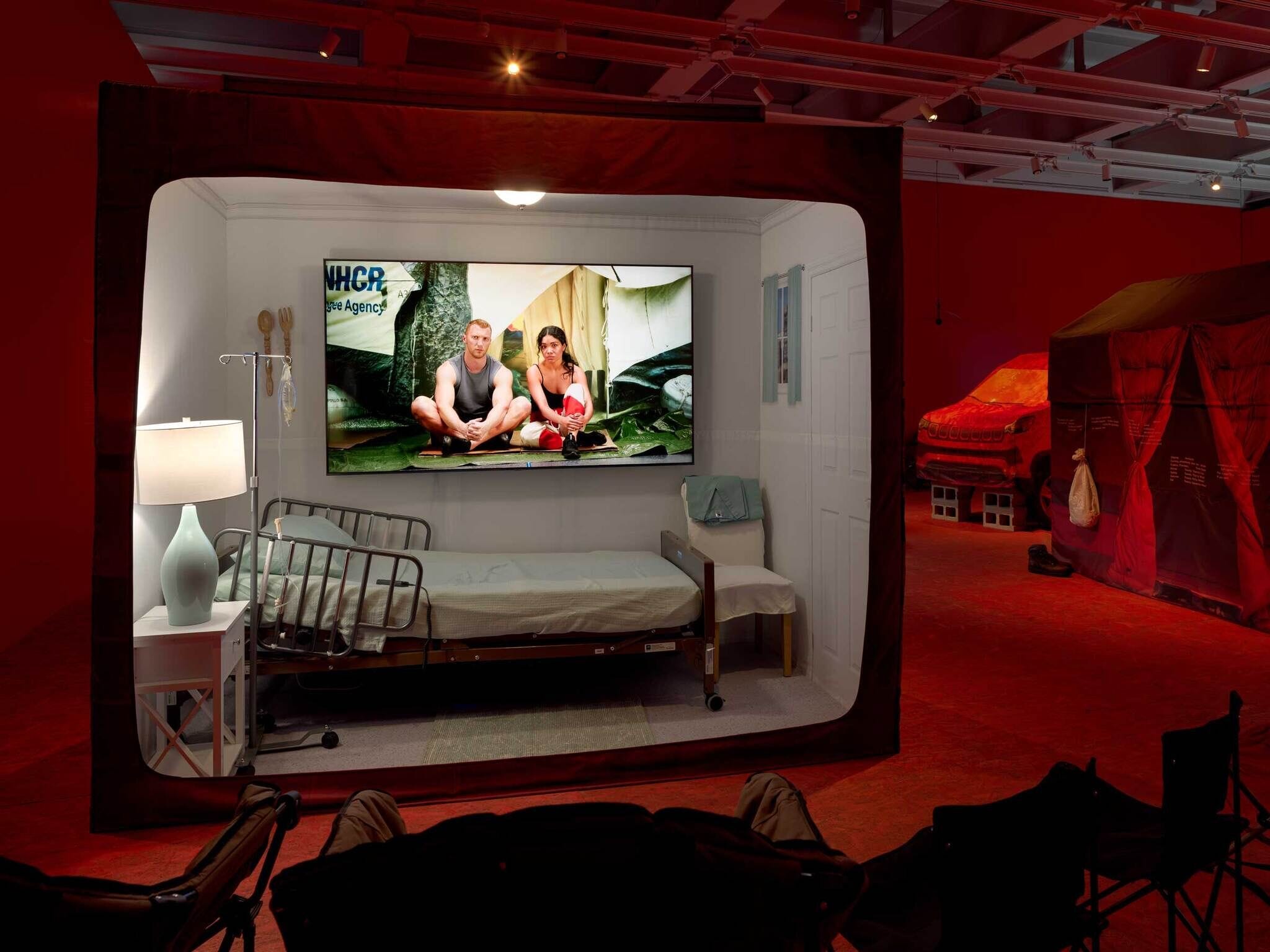
The exhibition surveys over a decade of the artist’s work, including new installations and moving image works that address the climate crisis. Presented for the first time at the Whitney, these new science-fiction works approach the hotter, more dangerous future on the horizon from the perspective of essential workers who will inevitably be left to pick up the pieces. In an era defined by escalating crises, Kline’s work offers a visceral warning and calls for a more human future.
Looking forward to sharing my thoughts on both exhibits next week (also, if you have any suggestions for other shows to see while I’m in the city, please drop a comment or send me a message!)
What I’m reading
These two arrived in the mail recently and I am so excited to dive into both of them:
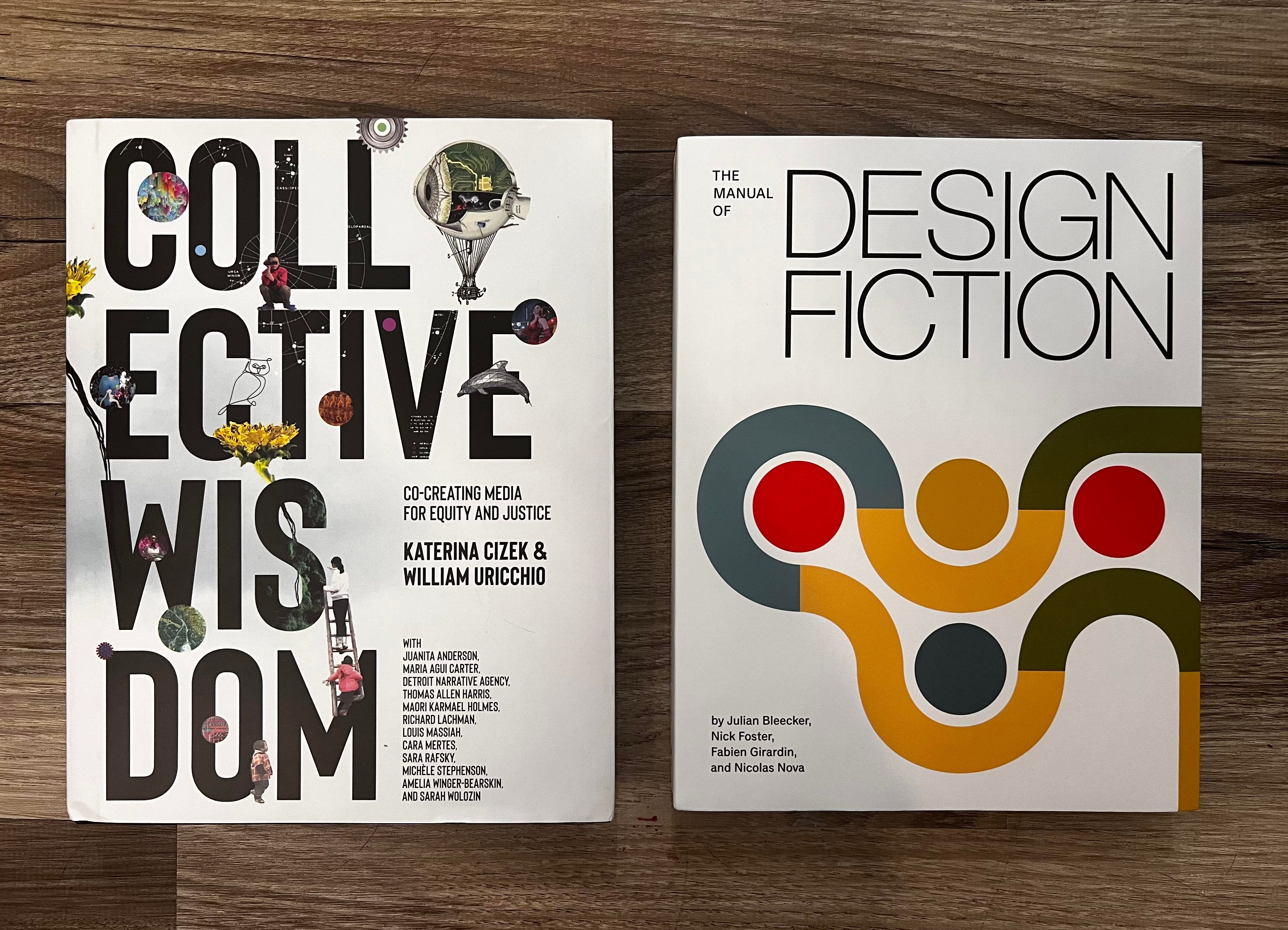
Collective Wisdom: Co-Creating Media for Equity and Justice
By Katerina Cizek and William Uricchio
With Juanita Anderson, Maria Agui Carter, Detroit Narrative Agency, Thomas Allen Harris, Maori Karmael Holmes, Richard Lachman, Louis Massiah, Cara Mertes, Sara Rafsky, Michèle Stephenson, Amelia Winger-Bearskin and Sarah Wolozin
Co-creation is everywhere: It's how the internet was built; it generated massive prehistoric rock carvings; it powered the development of vaccines for COVID-19 in record time. Co-creation offers alternatives to the idea of the solitary author privileged by top-down media. But co-creation is easy to miss, as individuals often take credit for—and profit from—collective forms of authorship, erasing whole cultures and narratives as they do so. Collective Wisdom offers the first guide to co-creation as a concept and as a practice, tracing co-creation in a media-making that ranges from collaborative journalism to human–AI partnerships.
$34.95 [buy it here]
The Manual of Design Fiction
by Julian Bleecker, Nick Foster, Fabien Girardin and Nicolas Nova in collaboration with Patrick Pittman and Chris Frey of No Media Co.
“The members of the Near Future Laboratory tell a masterful story about a design approach that embeds the potential social impacts and unforeseen consequences of technological development into the design process rather than as an afterthought. This book should be essential reading for designers, business leaders, engineers, artists, and anyone who is interested in creating a more liveable, ethical and inclusive future.” - David A. Kirby, author of Lab Coats in Hollywood
$50 [buy it here]
Thanks so much for reading this first edition of the newsletter! It is an experiment of sorts right now as I work out exactly how I might want to structure it so bear with me a bit. And please, reach out if you have something good you think I should check out or just to say hello. I absolutely would love to hear what you are seeing/reading/making.
You can also follow me on LinkedIn.
Till next week!